Damp Inspection Eastern Suburbs
Find out if it's rising damp, the courtyard, the rock or the sea air before you commit to anything.
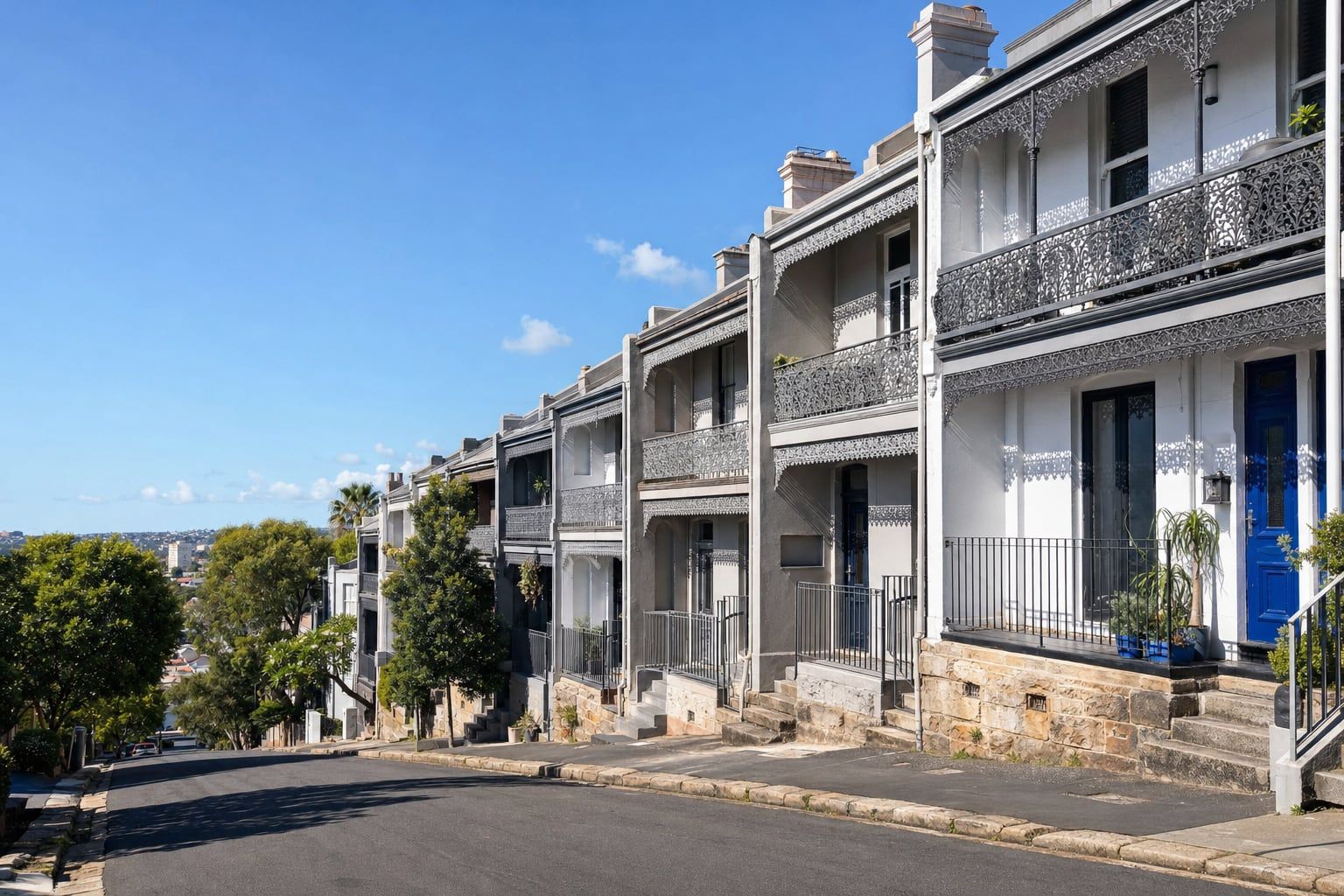
A damp inspection in the Eastern Suburbs has to sort out more possible causes than most places. A Paddington terrace can be damp from its slate damp course, from a courtyard paved above it, from the terrace uphill, or from a still subfloor under its long, narrow floor. A Bondi flat can have rising damp in its ground-floor walls and salt from the surf in its render. Each points to a different fix.
So the first step is a proper diagnosis, and it’s free.
What we check
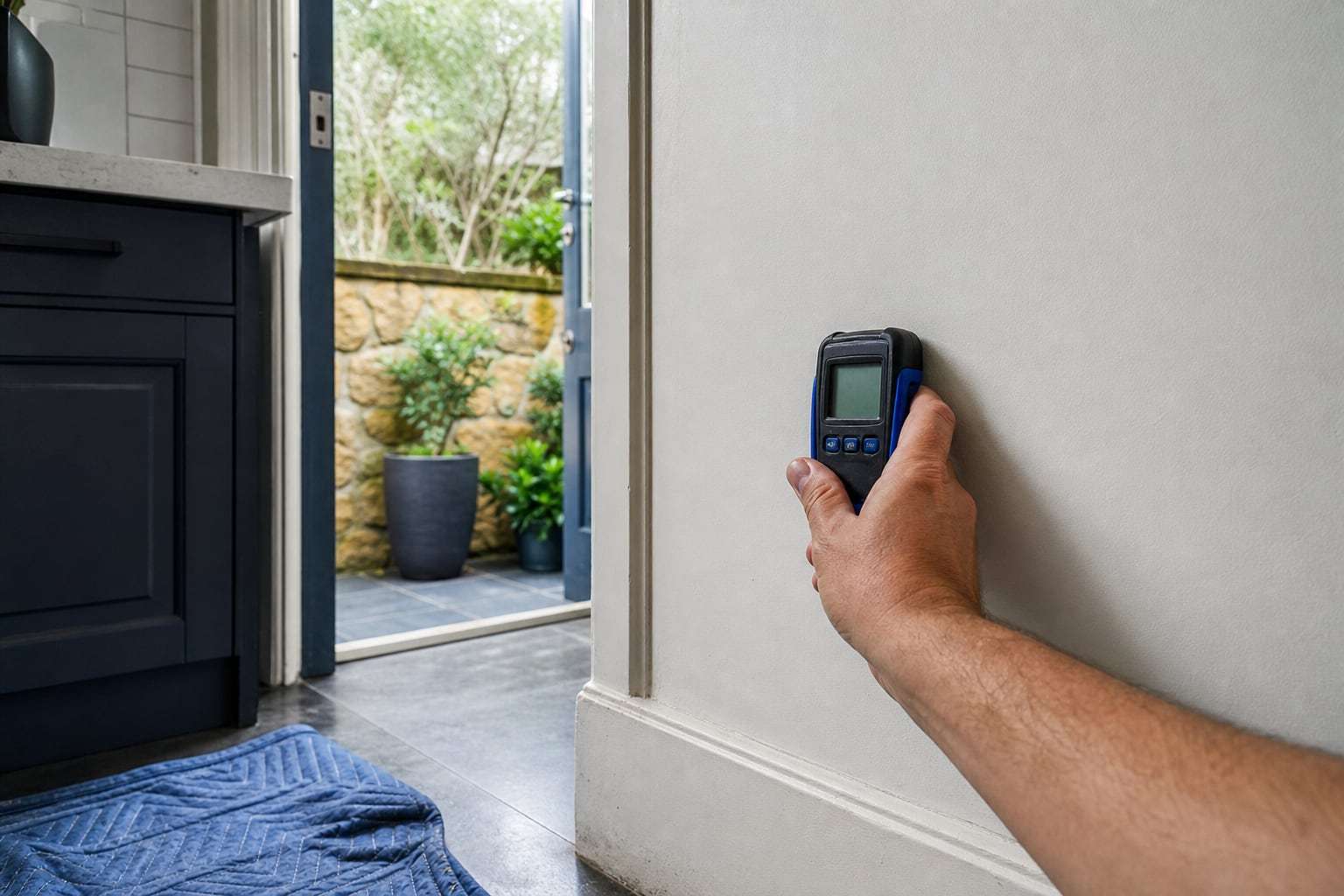
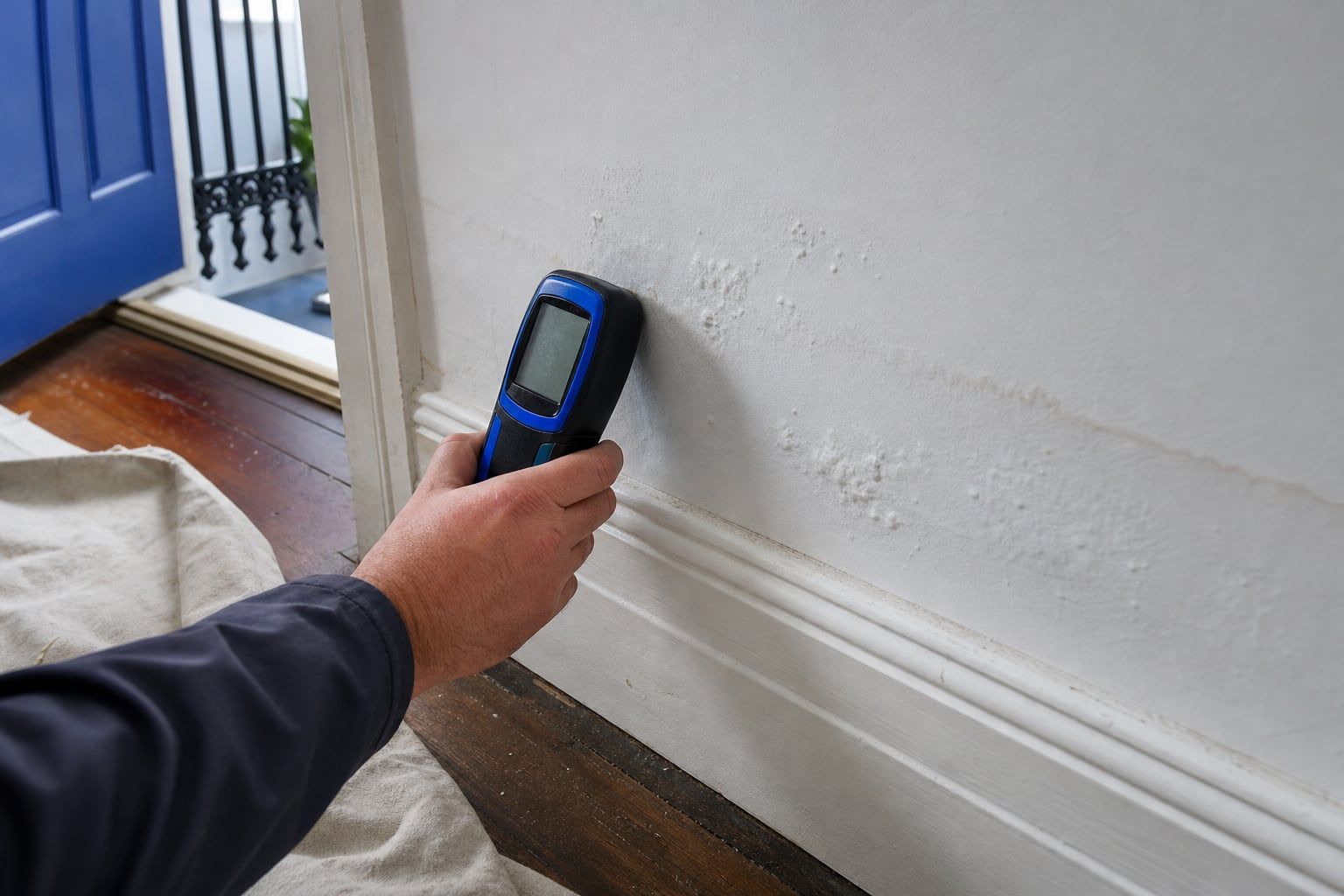
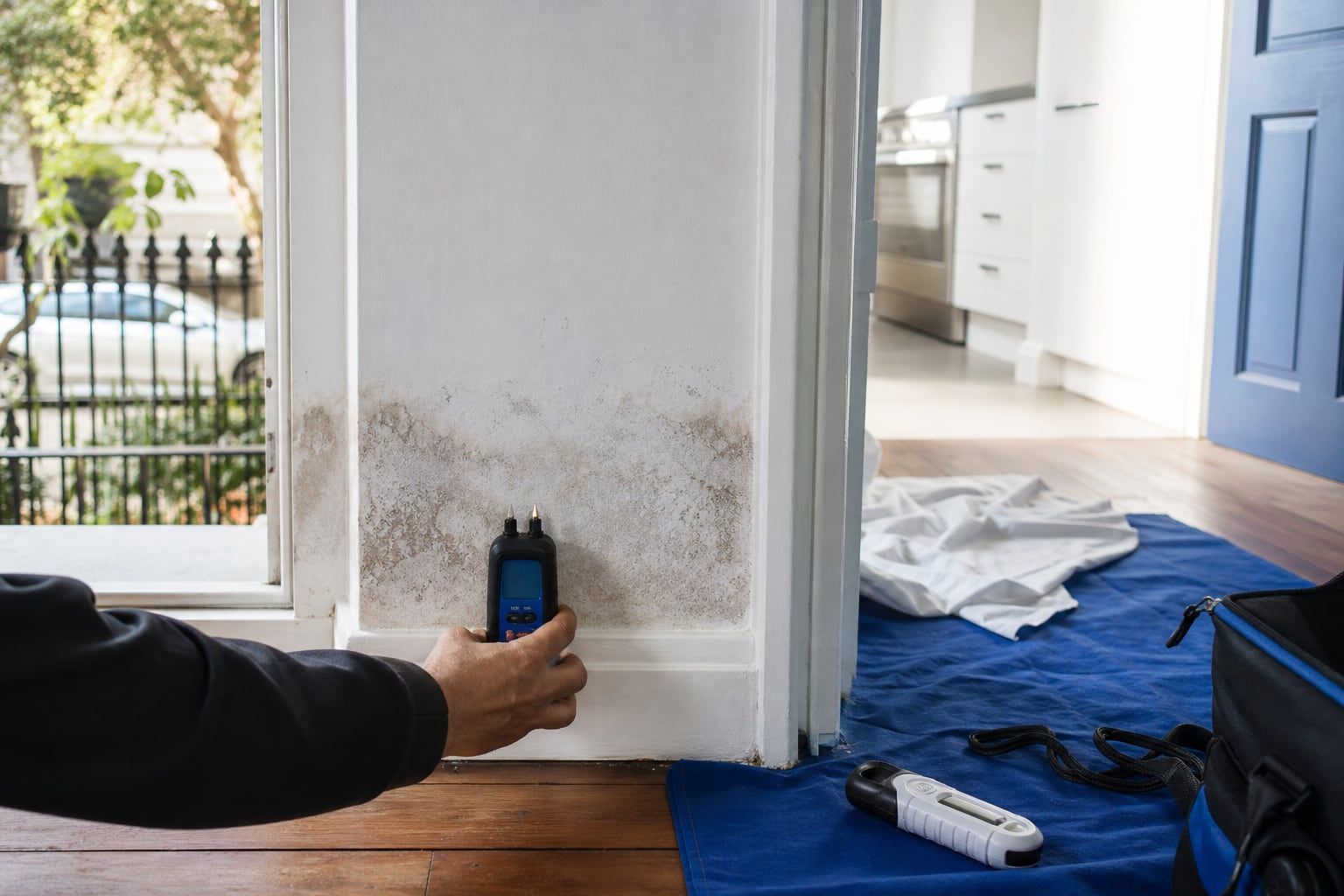
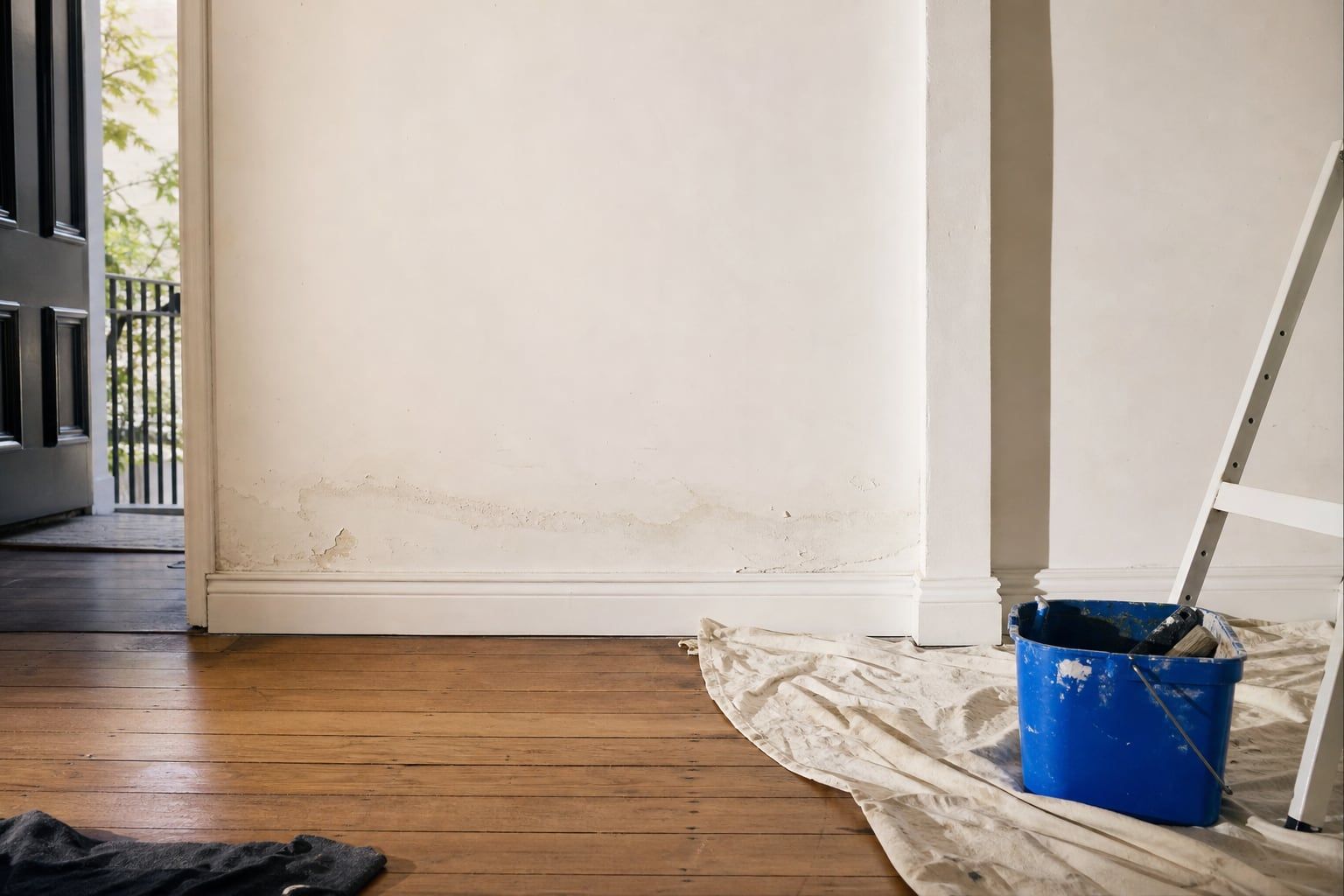
Each damp wall, in detail. Readings along the wall and up it, so we can see where the moisture peaks and where it stops. Rising damp forms an even band along the base that fades below about a metre. Courtyard damp is heaviest on the back wall and worse after rain. Basement damp can go as high as the ground outside.
Surface and depth. Salt, whether from the ground or the ocean air, reads as moisture on a meter. Readings at depth tell a salty surface from a wet wall.
A salt test on the plaster or render.
Party walls. Damp often runs along the shared walls of terraces and semis. We read them from your side and note whether the neighbour’s side may need attention too.
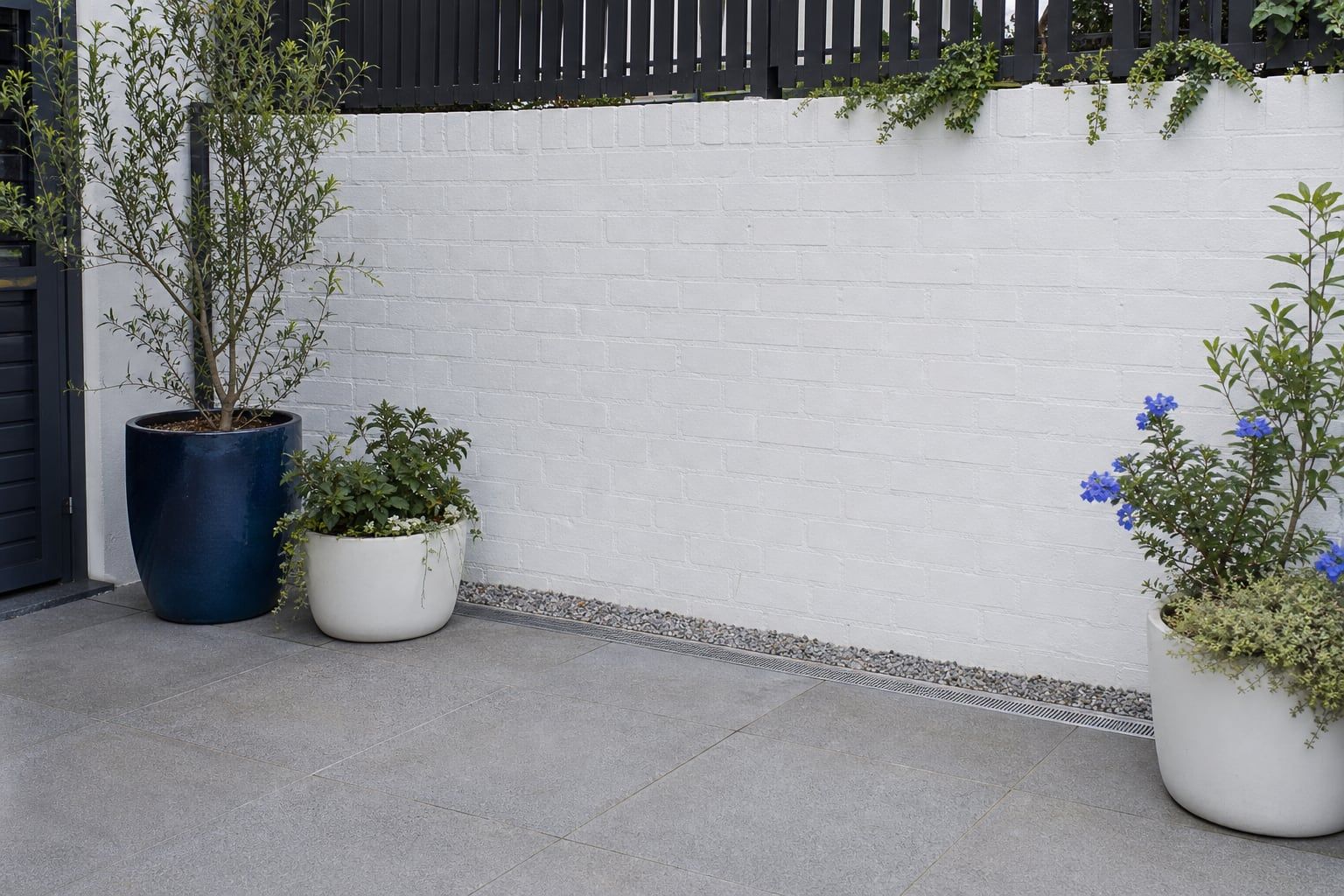
The courtyard. We compare the paving level with the base of the back wall, check the fall, the grate and where the downpipes go.
Basements and lower rooms cut into sandstone, where water can come through the side of the wall.
The subfloor, wherever access allows.
What you get
A plain explanation on the day. For houses, a written quote follows if work is needed, listing each wall, the method and the price. For strata buildings, we provide a written diagnosis the strata manager or committee can use to decide on repairs. Our guide to damp in Art Deco flats explains how that process usually works.
Sometimes the answer is outside: lowering a strip of courtyard paving or connecting a downpipe can do more than any wall treatment.
When to book
- The kitchen or laundry at the back of a terrace has flaking paint and salt.
- A ground-floor unit smells musty or has mould in the wardrobes.
- A basement wall weeps after heavy rain.
- Render on a beachside wall is powdery or falling off.
- An earlier damp treatment hasn’t worked.
- You’re buying a terrace or older unit and want to know what you’re taking on.
Mould
If mould is what you’ve noticed, start with the diagnosis. Mould grows where a surface stays damp; we find what’s keeping it wet. See mould prevention for how we stop it returning. We don’t clean or remove mould.
Access in tight buildings
Terraces with no side passage, units off shared stairwells and basements reached through garages are all normal here. We work from inside and the courtyard, and only need access to the areas that are damp.
After the diagnosis
Where it’s true rising damp, our rising damp treatment page explains the repair. Where it’s the courtyard or a basement, our guide on damp courtyards and basements covers the fix. In a terrace, read rising damp in terraces.
Why it matters in older buildings
Many Eastern Suburbs buildings have had damp treated before, sometimes more than once, without the cause ever being identified. Paint goes on over salt, walls are injected that were wet from the courtyard, and basements are painted with sealers that peel. A diagnosis that looks at the whole building, inside and out, is what breaks that cycle and stops money being spent twice.
Not sure what you’re seeing? Our page on the signs of rising damp explains each symptom.
Updated
What good damp inspection looks like
Damp Inspection across the Eastern Suburbs
Damp Inspection in the Eastern Suburbs: step by step
- Request a visitSend your address through the form; a photo of the damp wall helps us prepare.
- Read every damp wallReadings along and up each wall, party walls included, at the surface and at depth, plus a salt test.
- Check the courtyard and belowPaving levels against the back wall, drains, downpipes, any basement, and the subfloor where we can reach it.
- Written findingsA plain explanation on the day, and for strata buildings a written report the committee can use.
Damp Inspection questions in the Eastern Suburbs
Something else on your mind? Call 02 9158 9927 and ask.
Is there a charge for the diagnosis?
No. The visit and readings are free, with no obligation.
Can you inspect a unit in a strata building?
Yes. We inspect the unit and the common walls we can reach and give a written report the strata manager or committee can work from.
Can you check a party wall from my side?
Yes. Readings are taken from your side; if your neighbour's side looks affected too, we'll say so.